
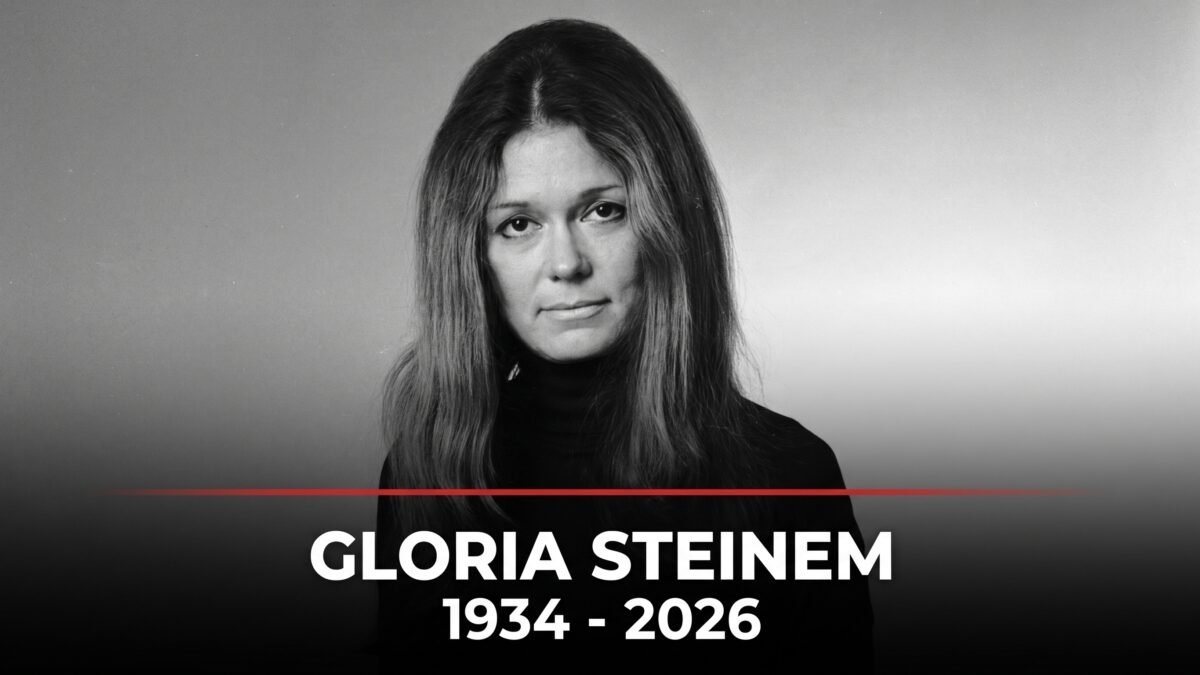
Gloria Steinem, the writer and activist who became the public face of American feminism in the 1960s and 70s, died on September 2, 2026, at her home in New York City. She was 92. Her foundation shared the news the next day on her verified social media accounts, saying she had passed “surrounded by some of the many who loved her.” No cause of death has been released.
Steinem’s death closes out nearly seventy years of public life, from her early days as a magazine writer to her final years hosting informal gatherings in her Manhattan apartment. Tributes arrived within hours, from senators to actors to the foundation she left behind.
Early life and education
Steinem was born on March 25, 1934, in Toledo, Ohio. She studied government at Smith College in Massachusetts and graduated magna cum laude in 1956. A Chester Bowles Fellowship then took her to India for two years, an experience she later said shaped how she thought about grassroots organizing for the rest of her career.
From an undercover assignment to Ms. Magazine
Steinem’s first major byline came in 1963, when she took a job undercover as a Playboy Bunny to report on working conditions inside Hugh Hefner’s clubs. The piece made her name in journalism, though she said in later years that she regretted taking the assignment. Six years after that, she attended a public hearing where women spoke openly about their abortions, an event she pointed to as the moment that pulled her into full-time activism.
She went on to co-found Ms. Magazine, the publication that carried her writing and the feminist movement’s politics to a national readership for decades.
Decades of activism
Steinem spent much of her adult life on the road: college campuses, community centers, marches, rallies. She once told the Associated Press that organizing in person mattered because people cannot fully connect with each other over the phone or online.
She coined the phrase “reproductive freedom” in a 1981 interview, later published in the oral history “Particular Passions: Talks with Women Who Shaped Our Times.” She pushed for equal pay, opposed the Vietnam War, and defended LGBTQ rights inside a movement that did not always welcome that fight. She also used her platform for women other movements tended to overlook, including the Indian economist Devaki Jain and Cherokee Nation leader Wilma Mankiller.
Her record wasn’t free of controversy. Steinem faced years of scrutiny over her early ties to a CIA-linked youth organization, a chapter of her career she addressed publicly more than once.
Marriage and personal life
For most of her career, Steinem argued that marriage put women at a legal disadvantage, and she stayed single into her 60s. In 2000, at age 66, she married David Bale, an entrepreneur and animal rights activist who was also the father of actor Christian Bale. She said the marriage laws had finally changed enough to make the institution workable for her. Bale died of lymphoma three years later, in 2003.
In later interviews, Steinem spoke openly about seeking an illegal abortion in 1957, at age 22, and said the decision let her build the career that followed. In her New York apartment, she hosted what she called “Talking Circles,” informal gatherings that drew hundreds of guests over the years and doubled as a meeting point for social justice groups.
She said she had few regrets about her life, but did regret not being there when her father died.
Tributes from Washington to Hollywood
Reaction to her death came quickly from politics and entertainment. Former Secretary of State Hillary Clinton wrote that Steinem had opened doors not just for herself but for millions of women who came after her, and credited her with helping create the conditions that let women like astronaut Sally Ride break into fields once closed to them. Senators Bernie Sanders and Elizabeth Warren both pointed to her decades of work on abortion access and fair pay.
Actress Julianne Moore, who played Steinem in the 2020 film “The Glorias,” wrote on Instagram that researching the role had been “one of the most edifying” experiences of her life, and said Steinem’s honesty and patience gave her a model for how to move through the world.
Flowers gathered outside her Manhattan apartment building in the days after her death. Her representatives are asking well-wishers to light a candle in her memory, or to donate to her charity, Gloria’s Foundation, in place of flowers.
A memoir arriving weeks later
Steinem’s second memoir, “An Unexpected Life,” had been scheduled for release later in September 2026, just weeks after her death. Its publication means her own account of her final years will reach readers only now that she is gone.
Frequently asked questions
How did Gloria Steinem die?
Her foundation has not released a cause of death. She died at her home in New York City on September 2, 2026, and the news was announced the following day.
How old was Gloria Steinem when she died?
She was 92. She was born on March 25, 1934.
What was Gloria Steinem best known for?
She’s best known as a leading voice of second-wave feminism, as co-founder of Ms. Magazine, and for coining the phrase “reproductive freedom.”
Was Gloria Steinem married?
Yes. She married David Bale, an entrepreneur and the father of actor Christian Bale, in 2000. He died in 2003.
Did Gloria Steinem have children?
She had no biological children. Through her marriage to David Bale, she became Christian Bale’s stepmother.
What is Gloria Steinem’s legacy?
Her decades of writing and organizing helped push abortion rights, equal pay and reproductive freedom into mainstream political debate, work carried on today through Ms. Magazine and the organizations she helped build.
