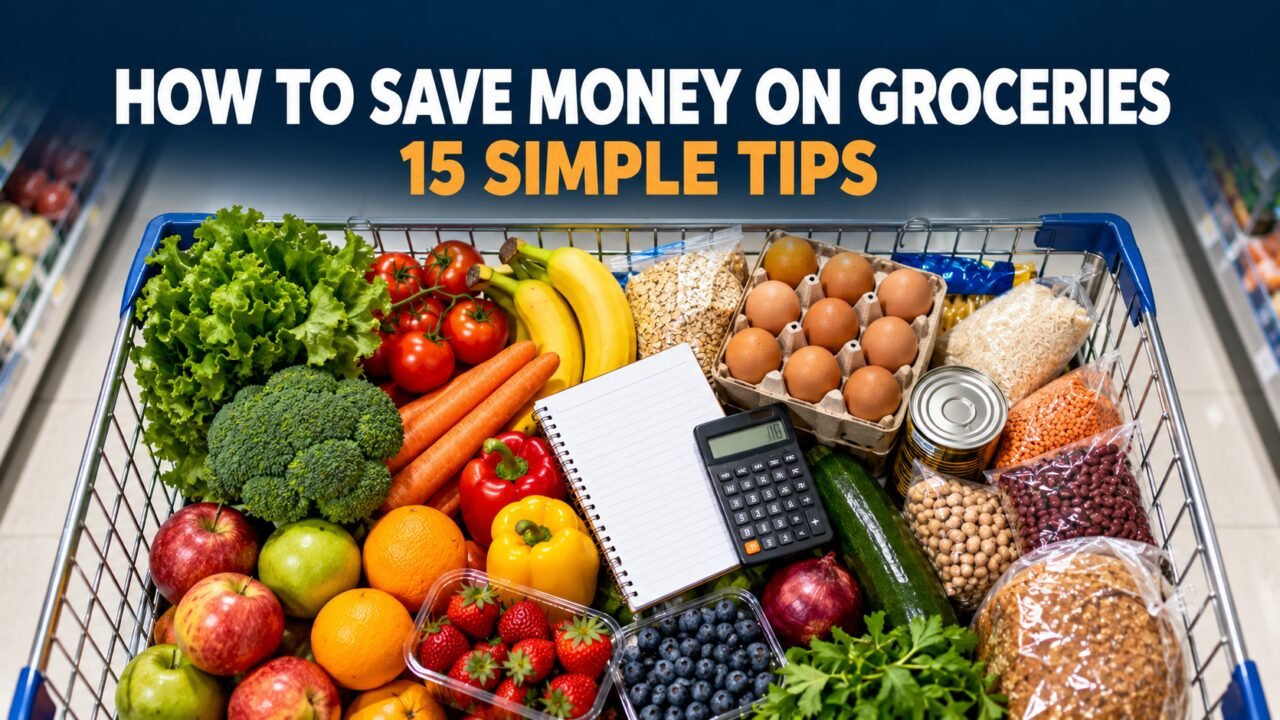
If you have been wondering how to save money on groceries without clipping coupons for hours or living on rice and beans, you are in good company. Grocery prices have climbed sharply over the past few years, and many families now spend noticeably more for the same cart of food than they did before the pandemic. The weekly trip to the store has become one of the most stressful parts of the household budget.
The good news is that a few habits make a real difference, and most of them take very little time once they become routine. This guide covers 15 simple tips that actually work, a sample budget-friendly week, the mistakes that quietly inflate your bill, and where to find help if money is tight.
Table of Contents
Why your grocery bill keeps climbing
Food prices rise for many reasons at once: higher costs for labor, transportation and packaging, weather that damages crops, animal diseases that affect supplies of eggs and meat, and changes in trade and tariffs. Some price increases fade over time, but many stick, which is why the total at the register rarely goes back to where it was.
There is also a quieter factor: shrinkflation. Instead of raising prices, some manufacturers reduce the size of a package while keeping the price the same. A box of cereal or a bag of chips might look identical but contain an ounce or two less. It is one reason paying attention to unit prices matters more than ever.
You cannot control any of that. What you can control is how you plan, where you shop, what you buy and how much food you throw away.
How to save money on groceries: 15 simple tips
You do not need to do all of these. Start with three or four that fit your life, and add more once they become habits.
1. Plan meals before you shop
A simple plan for the week’s dinners is the single biggest money-saver for most households. Look at your calendar, decide what you will cook on busy nights and quieter nights, and build your shopping list from that plan. Planning cuts impulse buys, reduces takeout and means less food spoils in the fridge.
2. Shop your kitchen first
Before writing the list, check what you already have in the fridge, freezer and pantry. Build at least one or two meals around ingredients that need using up. It is surprisingly easy to buy a second jar of something you already own.
3. Always use a list, and stick to it
Stores are designed to make you buy more than you planned, from the displays at the end of aisles to the candy at the register. A list keeps you focused. Many grocery apps let you build a list, check prices and add digital coupons at the same time.
4. Compare unit prices
The shelf tag usually shows the price per ounce, pound or count in smaller print. That number lets you compare different package sizes and brands fairly. The bigger package is often cheaper per unit, but not always, especially when a smaller size is on sale.
5. Choose store brands
Store brands, sometimes called private labels, are often noticeably cheaper than name brands, sometimes by a quarter or more. For staples like flour, sugar, canned vegetables, pasta, milk, spices and cleaning supplies, the difference in quality is often small or nonexistent. Try a store brand once, and keep the ones your family likes.
6. Buy produce in season
Fruits and vegetables are cheapest and tastiest when they are in season locally. In fall, that means apples, pears, squash, sweet potatoes, cabbage and root vegetables. Out-of-season produce that has traveled long distances usually costs more.
7. Do not skip frozen and canned
Frozen fruits and vegetables are picked and frozen at their peak and are nutritionally comparable to fresh. They are often cheaper, especially out of season, and they do not spoil in a few days. Canned beans, tomatoes and fish are affordable, long-lasting sources of nutrition too. Choose low-sodium and no-added-sugar versions where you can.
8. Cook more meals around cheap proteins
Meat is usually the most expensive part of a grocery bill. Building a few meals a week around beans, lentils, eggs, canned tuna, tofu or chicken thighs instead of pricier cuts can lower costs quickly. Stretching meat by mixing it with beans or vegetables in chili, tacos and pasta sauce works well too.
9. Use your store’s app and loyalty program
Most major grocery chains now put their best deals in their apps: digital coupons, personalized offers and member-only prices. It takes a couple of minutes to load coupons before you shop. Cash-back apps can add a little more on top, but only for things you were going to buy anyway.
10. Watch the weekly sales cycle
Stores rotate sales on a predictable schedule. When a staple you use often, such as coffee, cereal or toilet paper, hits a genuinely low price, buy enough to last until the next sale, as long as you have space and it will not spoil.
11. Consider a warehouse club carefully
Warehouse clubs such as Costco, Sam’s Club and BJ’s can offer excellent prices on bulk items, especially for larger families. But memberships cost roughly $50 to $65 a year or more, and it is easy to overspend on huge packages you will not finish. Do the math on the items you actually buy before joining.
12. Try discount grocers
Stores such as Aldi, Lidl and regional discount chains keep prices low by offering fewer brands, simpler stores and more private labels. Many shoppers find they can save a significant amount by doing most of their shopping at a discount store and picking up a few specialty items elsewhere.
13. Cut food waste
The U.S. Department of Agriculture estimates that 30 to 40 percent of the food supply goes to waste. At home, that is money in the trash. Store food properly, freeze leftovers and bread before they go bad, and plan a “use it up” night each week. The USDA’s free FoodKeeper app shows how long different foods last in the fridge and freezer.
14. Understand date labels
“Best by” and “use by” dates on most foods refer to quality, not safety. With the exception of infant formula, food past its best-by date is often still safe to eat if it has been stored properly and looks and smells normal. Understanding this can stop you from throwing away perfectly good food.
15. Shop less often, and not when hungry
Every trip to the store is a chance to buy things you did not plan for. Shopping once a week or even every two weeks, with a solid list, usually costs less than several quick trips. And never shop on an empty stomach, which makes snacks and treats far more tempting.
Smart ways to use tools and technology
Grocery delivery and pickup can save money for some people, because shopping online makes it easier to stick to a list and avoid impulse buys. But delivery fees, service charges, tips and higher item prices can add up. Curbside pickup, which is often free above a minimum order, can be a good middle ground.
Apps that sell surplus food at a discount, such as Too Good To Go and Flashfood, let you buy bags of bakery items, produce and prepared foods near their best-by dates at reduced prices. Availability depends on your area.
A simple spreadsheet or notes app where you record what you spend each week can be eye-opening. Tracking for a month shows exactly where the money goes.
A sample budget-friendly week
Here is an example of a week of dinners built around affordable ingredients and leftovers:
- Monday: black bean and vegetable tacos with rice
- Tuesday: sheet-pan chicken thighs with potatoes and carrots
- Wednesday: leftover chicken in a quick fried rice with frozen peas and eggs
- Thursday: pasta with a lentil tomato sauce and a side salad
- Friday: homemade pizza on store-bought dough, topped with whatever vegetables need using
- Saturday: big pot of chili, with extra frozen for later
- Sunday: breakfast-for-dinner with eggs, toast and fruit
This kind of plan reuses ingredients across several meals, which reduces waste. It also includes one “clean out the fridge” night and one freezer meal for a busy week ahead.
Mistakes that quietly raise your grocery bill
Some of the biggest costs are easy to miss:
- Buying pre-cut fruits and vegetables when whole ones are much cheaper
- Paying for single-serving snacks instead of buying larger packs and portioning them at home
- Buying bottled water and drinks when tap water and homemade iced tea would do
- Grabbing prepared foods from the deli counter on busy nights without a backup plan
- Buying bulk sizes of foods that spoil before you finish them
- Letting a “sale” price persuade you to buy something you did not need
None of these is a big deal on its own, but together they can add a lot to a monthly grocery bill.
Planning groceries around the holidays
The final months of the year can wreck a food budget, with Halloween candy, Thanksgiving dinner and holiday baking all arriving within a few weeks. They also bring some of the best deals of the year, if you plan for them.
Many supermarkets sell turkeys at very low prices in the weeks before Thanksgiving to bring shoppers into the store, and some offer a free or heavily discounted turkey with a minimum purchase. Baking staples such as flour, sugar, butter, chocolate chips and spices also go on sale in November and December. If you have freezer and pantry space, buying these at their lowest prices can cover your needs well into the new year.
The risk is overbuying. Holiday displays are full of seasonal treats that cost more than regular groceries. Decide on your holiday menu early, make a separate list for it and set a budget for the extras.
Cooking more from scratch
Convenience foods save time, but you pay for it. Dried beans cost much less per serving than canned. A loaf of homemade bread costs a fraction of a bakery loaf. Seasoning mixes, salad dressings and sauces are easy to make from basic pantry ingredients.
You do not have to make everything yourself. Pick one or two items your family eats often and try making them at home for a month. If it saves money and you enjoy it, keep going. If not, go back to buying them and try something else.
Growing a few herbs on a windowsill is another small win. Basil, parsley, mint and chives are expensive in small packages at the store, and many grow easily in pots.
How to track your grocery spending
It is hard to cut a grocery bill if you do not know what it is. Start by writing down every food purchase for one month, including quick stops, takeout and coffee. Most people are surprised by the total.
Then set a weekly budget based on what you learned, and check how you did at the end of each week. Some families use a separate debit card or envelope of cash just for groceries, so they can see exactly how much is left. Others use budgeting apps that sort spending by category automatically.
The point is not to be perfect. It is to notice patterns, such as frequent midweek trips or a weekly takeout habit, and decide which ones are worth changing.
Saving money with kids at home
Feeding a family is where grocery costs grow fastest. Involving kids in planning helps: let each child pick one dinner for the week from a list of options, and give older children a small budget for their own snack choices. They learn about money, and you get fewer complaints at dinner.
Pack lunches and snacks from home instead of buying them on the go, and keep a bowl of fruit and a container of cut vegetables at eye level in the fridge. Cooking double batches of family favorites such as soups, casseroles and pasta sauces, then freezing half, gives you an easy dinner on nights when takeout would otherwise win.
For babies and toddlers, buying store-brand formula, which must meet the same federal nutrition standards as name brands, can save a meaningful amount over a year.
Eating well on a budget
Saving money does not have to mean eating worse. Some of the healthiest foods are among the cheapest: beans, lentils, oats, brown rice, eggs, bananas, carrots, cabbage, frozen vegetables and canned fish. The federal MyPlate site offers budget-friendly recipes and meal-planning tools built around balanced meals.
Cooking at home, even simple meals, is almost always cheaper and healthier than takeout. Learning a handful of reliable, low-cost recipes that your household enjoys is one of the best long-term investments you can make.
If your mornings are chaotic, a simple breakfast routine can also cut spending on coffee shop stops. Our guide to a healthy morning routine has ideas for quick, affordable breakfasts.
Help if money is tight
If your budget does not stretch far enough, help is available. The Supplemental Nutrition Assistance Program, or SNAP, provides monthly benefits to eligible households to buy groceries. WIC offers food, nutrition support and health referrals for pregnant women, new mothers, infants and young children. Eligibility rules vary by state, and it is worth checking even if you think you might not qualify.
Food banks and food pantries, many connected to the national Feeding America network, provide free groceries in almost every community. Many schools offer free or reduced-price meals for children, and some communities have free summer meal programs.
There is no shame in using these programs. They exist to help families through tight periods, and many people use them at some point.
How to save money on groceries: common questions
How much should a family spend on groceries?
It varies widely by family size, location and diet. The USDA publishes monthly food plan estimates at several budget levels, which can be a useful benchmark.
Is it cheaper to buy groceries online?
It can be, if it helps you avoid impulse buys, but delivery fees and tips can cancel out the savings. Free curbside pickup is often the best value.
Are store brands as good as name brands?
For many staples, yes. Quality is often similar, and prices are usually lower.
Is frozen produce as healthy as fresh?
Frozen fruits and vegetables are frozen at peak ripeness and are generally comparable to fresh in nutrition.
What is the fastest way to lower my grocery bill?
Plan your meals for the week, shop with a list and cut back on food waste. Those three habits make the biggest difference for most households.
Is meal prepping worth it for saving money?
For most households, yes. Cooking a few basics in advance, such as a pot of rice, roasted vegetables and a batch of beans or chicken, makes it much easier to skip takeout on busy weeknights. You do not need to prepare every meal. Even two or three ready-to-go dinners in the fridge can lower your grocery bill and your spending on delivery apps, because the food you bought actually gets eaten.
Do coupons still save money on groceries?
Yes, but mostly through digital coupons in store apps rather than paper clippings. Loading them takes a few minutes before each trip.
Pick three tips from this list and try them on your next trip to the store. For more practical lifestyle guides, see our lifestyle section and latest stories.