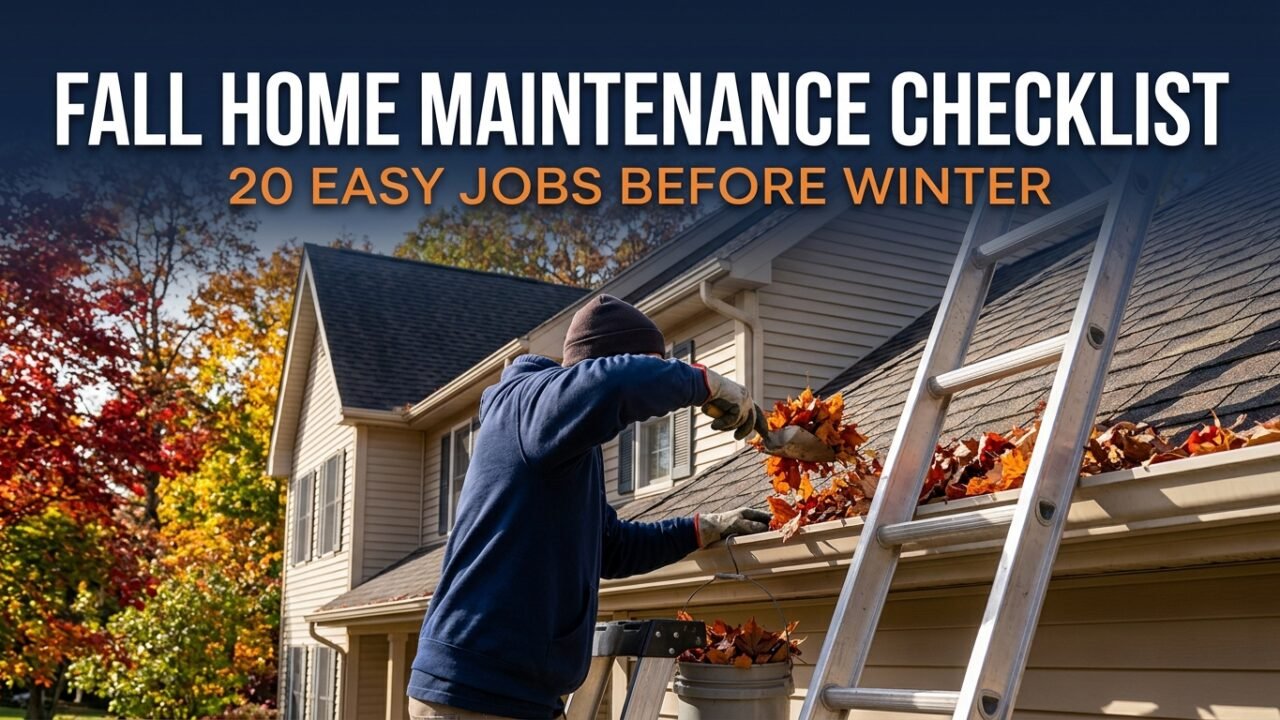
A fall home maintenance checklist is the cheapest insurance a homeowner can buy. A few weekends of work in September and October can prevent frozen pipes, roof leaks, sky-high heating bills and house fires later in the winter. Most of the jobs are simple, many cost nothing, and the ones that need a professional are far cheaper to book now than in an emergency in January.
This checklist covers 20 jobs, grouped by area, with notes on which ones you can do yourself and which are worth handing to a pro. Renters will find plenty here too, especially the safety checks and energy-saving tips.
Table of Contents
Why fall home maintenance matters
Fall is the sweet spot for home maintenance. The weather is usually mild enough to work outside, contractors are less busy than they will be once the first cold snap hits, and you have time to fix problems before freezing temperatures, snow and heavy rain arrive.
Winter is hard on houses. Water expands when it freezes, turning small leaks into burst pipes. Blocked gutters cause ice dams and roof damage. Heating systems that have sat idle all summer are more likely to fail on the first cold night. A little attention now avoids most of these problems.
Outside the house
1. Clean gutters and downspouts
Gutters full of leaves and debris cannot carry rain away from your house. Water can overflow, soak the walls and pool around the foundation, and in cold climates, blocked gutters help ice dams form along the roof edge.
Clean gutters after most leaves have fallen, and check that downspouts carry water at least a few feet away from the foundation. If climbing a ladder makes you nervous, hire a pro. Falls from ladders cause many serious injuries every year.
2. Inspect the roof
From the ground, or with binoculars, look for missing, cracked or curling shingles, damaged flashing around chimneys and vents, and moss or debris buildup. If you spot problems, call a roofer now. Small repairs are much cheaper than fixing water damage after a winter storm.
3. Trim trees and branches
Branches that hang over the roof or touch power lines can cause serious damage in winter storms, when snow and ice add weight. Trim branches back from your house and gutters. Leave anything near power lines to your utility company or a licensed arborist.
4. Seal gaps around the outside
Walk around the outside of your house and look for gaps around windows, doors, pipes, vents and cables where they enter the wall. Seal small gaps with exterior caulk. This keeps heat in, water out and rodents from moving in for the winter.
5. Drain and shut off outdoor faucets
In areas where temperatures fall below freezing, disconnect garden hoses, drain them and store them inside. Turn off the water supply to outdoor faucets from inside the house, if you have a shutoff valve, then open the outdoor faucet to drain the line. Frozen water in an exterior pipe can burst it inside the wall.
6. Winterize the sprinkler system
If you have an in-ground irrigation system, it needs to be drained or blown out with compressed air before the first hard freeze. Many homeowners hire a landscaping company to do this, since the equipment and pressure settings matter.
7. Take care of the lawn
Early fall is the best time to aerate and overseed cool-season lawns, common across the northern half of the country. Keep mowing as long as the grass grows, and mulch fallen leaves with the mower rather than letting thick layers smother the lawn. Our guide on why leaves change color has more ideas for using fallen leaves in your garden.
8. Store outdoor furniture and grills
Clean patio furniture and store it in a shed or garage, or cover it securely. Clean your grill, and if it uses propane, store the tank outdoors in an upright position, never inside a garage or house.
Heating and energy
9. Service the furnace or heat pump
Have a qualified technician inspect and service your heating system before you need it. A tune-up improves efficiency and safety and can catch problems before they cause a breakdown. Book early, as heating contractors get busy once temperatures drop.
10. Replace the HVAC filter
A dirty filter makes your heating system work harder and can reduce air quality. Check it now and replace it according to the manufacturer’s instructions, often every one to three months during heavy use. Mark the date on the new filter so you remember when to check it next.
11. Seal drafts inside
Add weatherstripping to doors and windows that let in cold air, and install door sweeps on exterior doors. Foam gaskets behind outlet covers and switch plates on exterior walls help too. The U.S. Department of Energy’s Energy Saver site has guides on sealing air leaks, one of the most cost-effective ways to lower heating bills.
12. Reverse your ceiling fans
Most ceiling fans have a switch that changes the direction of the blades. In winter, run them clockwise at a low speed to push warm air that collects near the ceiling back down into the room.
13. Check insulation
If your attic has thin or patchy insulation, adding more is one of the best long-term energy investments. Insulate exposed water pipes in unheated spaces such as crawl spaces, basements and garages to prevent freezing.
If you want more ideas for lowering winter energy costs, our guide on how to cut energy bills was written for British homes, but most of its tips work just as well in the U.S.
Safety checks
14. Test smoke and carbon monoxide alarms
Test every smoke alarm and carbon monoxide detector, and replace batteries as needed. Many people do this when the clocks change for daylight saving time. The National Fire Protection Association recommends replacing smoke alarms every 10 years. Carbon monoxide alarms also wear out, so check the manufacturer’s date.
Heating season is when carbon monoxide risks rise, because furnaces, fireplaces and gas appliances are in heavy use. Make sure you have a carbon monoxide alarm on every level of your home and outside sleeping areas.
15. Have the chimney inspected
If you use a fireplace or wood stove, have the chimney inspected and cleaned by a certified chimney sweep before the season starts. Creosote buildup can cause chimney fires, and blockages from nests or debris can send dangerous gases back into the house.
16. Clean the dryer vent
Lint buildup in dryer vents is a common cause of house fires. Clean the lint screen after every load, and at least once a year clean out the vent duct that runs to the outside of the house, or hire a professional to do it.
17. Check fire extinguishers
Make sure you have a working fire extinguisher in the kitchen and near other fire risks, such as the garage. Check the pressure gauge and the expiration date, and make sure everyone in the household knows where it is and how to use it.
Plumbing and water
18. Know where your main water shutoff is
If a pipe bursts, turning off the main water supply quickly can save thousands of dollars in damage. Find your main shutoff valve now, make sure it turns, and show everyone in the house where it is.
19. Flush the water heater
Sediment builds up in the bottom of tank water heaters over time, reducing efficiency and shortening the tank’s life. Many manufacturers recommend draining a few gallons or flushing the tank once a year. Follow your model’s instructions, or ask a plumber.
20. Test the sump pump
If your home has a sump pump, test it by pouring water into the pit to make sure it switches on and pumps water out. Fall rain and spring snowmelt are when it matters most. Consider a battery backup if you live in an area prone to power outages.
A simple four-weekend plan
Twenty jobs sound like a lot, but spread across a month they are manageable. Here is one way to split them:
- First weekend: test smoke and carbon monoxide alarms, replace the HVAC filter, book a furnace service and a chimney inspection
- Second weekend: seal gaps inside and out, add weatherstripping, reverse ceiling fans and check insulation
- Third weekend: trim branches, inspect the roof from the ground, store patio furniture and clean the grill
- Fourth weekend, after most leaves fall: clean gutters, drain outdoor faucets, winterize sprinklers and finish lawn care
If you only have time for a few jobs, prioritize safety first: alarms, the furnace, the chimney and the dryer vent. Then protect against water damage: gutters, outdoor faucets and pipes.
Budgeting for home maintenance
Home maintenance costs are easy to underestimate. A common rule of thumb is to set aside around 1% of your home’s value each year for maintenance and repairs, though older homes often need more. Spreading that across the year in a dedicated savings account makes unexpected bills far less painful.
Fall is a good time to review what you spent last year and what big jobs may be coming, such as a new roof, water heater or furnace. Replacing a failing system on your own schedule is usually cheaper than an emergency replacement in the middle of winter, when you have little choice about price or timing.
Keep receipts and records of all maintenance. They help with warranty claims, insurance claims and, if you sell, showing buyers the home has been well cared for.
A checklist for renters
Renters are not usually responsible for major home maintenance, but there is still plenty worth doing each fall. Test smoke and carbon monoxide alarms, and tell your landlord right away if any are missing or not working. Replace HVAC filters if your lease makes that your job, and use removable weatherstripping, draft stoppers and thermal curtains to stay warm.
Ask your landlord when the heating system was last serviced, whether gutters will be cleaned, and who to call in an emergency such as a burst pipe or no heat. Put requests in writing, and take photos of any problems. Knowing where the main water shutoff is can save your belongings, and your deposit, if a pipe bursts.
Keeping pests out for the winter
As temperatures drop, mice, insects and other pests look for warm places to spend the winter. Your home is an attractive option. Sealing gaps around pipes, vents and foundations, as described above, is the most effective defense.
Keep firewood stacked away from the house and off the ground, and store bird seed and pet food in sealed containers. Trim shrubs so they do not touch the siding, which gives pests an easy bridge. If you see signs of rodents, such as droppings or gnaw marks, deal with it early, before a small problem grows over the winter.
Second homes and vacation properties
If you have a vacation home or cabin that sits empty in winter, closing it up properly matters even more, because problems can go unnoticed for weeks. Shut off and drain the water system if the house will not be heated, or keep the heat at a safe minimum if it will be.
Unplug appliances, empty the refrigerator, secure windows and doors, and ask a neighbor or local caretaker to check on the property regularly. Smart thermostats, water leak sensors and security cameras can alert you to problems remotely, which is especially valuable in cold climates.
Get ready for winter storms
Put together a winter emergency kit before you need it: flashlights, batteries, a battery-powered radio, a first-aid kit, bottled water, nonperishable food, blankets and any medications your family needs. Ready.gov has a full checklist.
If you use a portable generator during power outages, run it outdoors only, far from windows, doors and vents. Never run a generator in a garage, even with the door open, because carbon monoxide can build up quickly.
DIY or hire a pro?
Many items on this list are easy weekend jobs: changing filters, testing alarms, sealing gaps, storing hoses and cleaning up the yard. Others are worth paying for, especially anything involving ladders on the roof, gas appliances, chimneys, electrical work or sprinkler blowouts.
When hiring, get more than one quote, check reviews and licenses, and be wary of anyone who knocks on your door offering urgent repairs after a storm. Door-to-door contractor scams are common in the fall and after severe weather.
Tools and supplies to keep on hand
A small kit makes most fall jobs easier:
- A sturdy ladder and a gutter scoop, plus work gloves
- Exterior caulk and a caulking gun
- Weatherstripping and door sweeps
- Spare HVAC filters in the right size
- Batteries for smoke and carbon monoxide alarms
- Pipe insulation sleeves
- A flashlight and a headlamp
- A basic toolkit with screwdrivers, pliers and an adjustable wrench
Buying these before the season starts saves repeated trips to the hardware store when you are in the middle of a job.
When to call a professional right away
Some problems should not wait. If you smell gas, leave the house immediately and call your gas utility or 911 from outside. If a carbon monoxide alarm sounds, get everyone out into fresh air and call 911.
Call an electrician if you see sparks, smell burning from outlets or have breakers that keep tripping. Call a plumber if you find a leak you cannot stop, water stains spreading on ceilings or walls, or signs of a frozen pipe. And call a roofer if you see daylight through the attic or water coming in during rain. Acting quickly limits the damage and the cost.
Condos, townhouses and apartments
If you live in a condo or townhouse, your homeowners association may handle roofs, gutters and exterior repairs, but you are usually responsible for everything inside your unit. Check your association’s rules so you know who does what, and report exterior problems early.
Inside, the same safety checks apply: alarms, filters, dryer vents and water shutoffs. Knowing where your unit’s water shutoff is matters even more in shared buildings, where a leak can quickly affect your neighbors.
Fall home maintenance checklist: common questions
When should I do fall home maintenance?
Ideally in September and October, before the first hard freeze and before contractors get busy with heating repairs.
How often should I clean my gutters?
At least twice a year, in late spring and late fall, and more often if you have many trees nearby.
How often should I service my furnace?
Once a year, ideally in early fall before heating season.
How do I stop pipes from freezing?
Drain outdoor faucets and hoses, insulate exposed pipes and keep your home heated, even when you are away.
How often should I replace smoke alarms?
The NFPA recommends replacing smoke alarms every 10 years and testing them monthly.
Print this list, pick one area each weekend in October, and you will head into winter with a safer, warmer and cheaper-to-run home. For more practical guides, see our lifestyle section.