Opinion
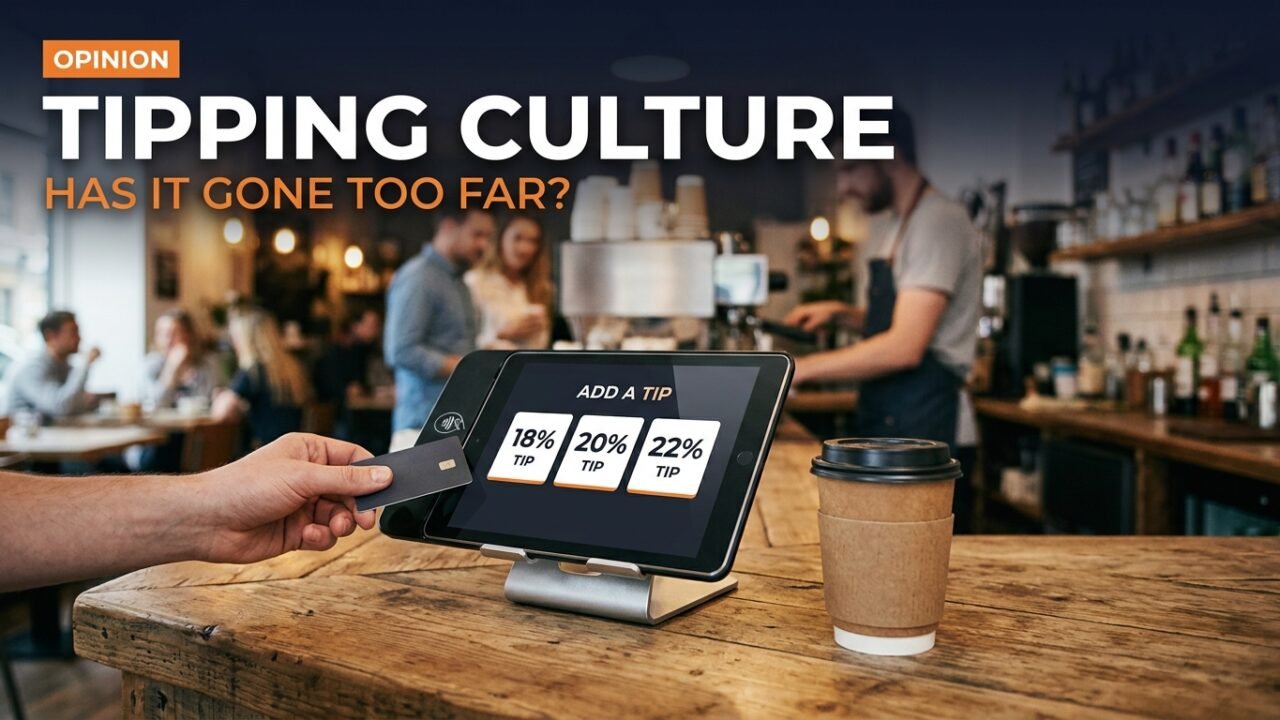
Tipping culture in the United States has drifted a long way from where it started. Tipping used to mean leaving extra for a waiter, a bartender or a cab driver who gave good service. Now a tablet swivels toward you at the coffee shop, the bakery counter, the self-checkout kiosk at the airport and even some stores where no one has served you at all. The suggested amounts start at 18%, 20% or 25%, and the option to skip is often buried in small print.
I do not think Americans have suddenly become stingy. I think the system has become confusing, awkward and unfair to both customers and the workers it is supposed to support. Here are five reasons it needs a reset, along with the strongest arguments on the other side.
Table of Contents
How tipping culture got here
Tipping arrived in the United States in the late 19th century, imported by wealthy travelers who had seen it in Europe. It spread quickly after the Civil War, and historians have documented how it allowed some employers, including railroad companies and restaurants, to avoid paying formerly enslaved workers a proper wage, leaving them to rely on tips instead.
That history still shapes the law. Under federal rules, employers can pay tipped workers a cash wage as low as $2.13 an hour, as long as tips bring their total pay up to the federal minimum wage of $7.25. The $2.13 figure has not changed since 1991. Some states require a higher cash wage, and a handful, including California, Washington and Oregon, require employers to pay tipped workers the full state minimum wage before tips.
For decades, the rules of the game were fairly clear: you tipped servers, bartenders, delivery drivers, hairdressers and a few others. That clarity has gone.
Reason 1: Tip screens are everywhere
The spread of touchscreen payment systems changed tipping almost overnight. Any business with a card reader can now add a tip prompt with a few clicks, and many have. A 2023 survey by the Pew Research Center found that about seven in ten Americans said tipping was expected in more places than it was five years earlier.
The prompts appear at counters where the worker simply hands over a packaged item, at self-service kiosks and at stores where tipping was never part of the deal. Customers are asked to decide in front of the person serving them, which creates social pressure to pay even when they do not think a tip is warranted.
Reason 2: Nobody knows the rules anymore
The same Pew survey found that only about a third of Americans said it was easy to know whether and how much to tip for different services. That confusion is a problem in itself. People worry about being rude, being cheap or being taken advantage of, and many end up tipping in situations where they feel uncomfortable.
A social custom that works depends on shared expectations. When every business sets its own suggested percentages and people cannot tell whether a tip goes to the worker, the business or a pool, the custom stops doing its job.
Reason 3: Workers deserve reliable pay
The strongest argument against the current system is not about customers at all. It is about workers. Tipped workers’ income can swing widely from shift to shift and season to season, depending on how busy the restaurant is, where they are assigned and even how customers perceive them.
Research has repeatedly found that tips can be influenced by factors unrelated to service quality, including a worker’s gender, race and appearance. A system that makes workers’ rent depend on the moods and biases of strangers is not a fair way to pay people.
In states where tipped workers get the full minimum wage before tips, restaurants have continued to operate, and tipping has not disappeared. That suggests a higher base wage and tipping can coexist.
Reason 4: Prices should be honest
When a menu or price tag does not reflect what you will actually pay, it becomes harder to compare prices and budget. Tipping, along with growing numbers of surcharges and service fees, means the price you see is often not the price you pay.
Many other countries handle this differently. In much of Europe and Asia, staff are paid a full wage and tipping is small or optional. In Britain, restaurants often add a clearly shown discretionary service charge, and a law that took effect in 2024 requires employers to pass all tips and service charges on to workers.
Clearer pricing would help customers and, arguably, businesses too. People are more comfortable spending when they know what something costs.
Reason 5: The tax break is not a real fix
In 2025, Congress passed a law allowing many tipped workers to deduct up to $25,000 of tip income from their federal income taxes for 2025 through 2028, with the benefit phasing out for higher earners. For many servers and bartenders, that is meaningful extra money, and I understand why it was popular.
But it does not address the underlying problem. It treats tip income more generously than other wages, which could encourage businesses to lean even more on tipping rather than paying higher base wages. Tips are still unpredictable, and workers who earn little in tips gain little from the deduction.
A better long-term goal would be pay that does not depend so heavily on the generosity of strangers.
The best arguments for keeping tipping
An honest argument has to take the other side seriously. Many experienced servers and bartenders earn more with tips than they would with a flat wage, especially in busy, high-end restaurants. Some of them strongly oppose changes that would replace tips with higher base pay, fearing they would take home less.
Restaurants also operate on thin margins. Raising wages means raising menu prices, and owners worry that customers will balk at higher prices even if tipping falls. Some high-profile restaurants that tried to eliminate tipping, such as Danny Meyer’s New York restaurant group, which launched a no-tipping policy in 2015, eventually brought tipping back.
Finally, some customers like tipping. They see it as a way to reward great service and to feel involved in how workers are paid. Those are fair points, and any change should be gradual and involve workers themselves.
How tipping works around the world
American tipping culture looks unusual from abroad. In Japan, tipping is generally not expected and can even cause confusion, because good service is considered part of the job and the price. In much of Europe, restaurant staff are paid a full wage, and customers typically round up the bill or leave a small amount, often 5% to 10%, for good service.
In the United Kingdom, a discretionary service charge of around 12.5% is common in restaurants, and it appears clearly on the bill. Customers can ask for it to be removed if service was poor. Australia and New Zealand have minimal tipping, supported by relatively high minimum wages. Canada is closest to the United States, with tipping widely expected, although most provinces require tipped workers to be paid a full minimum wage.
These differences show that tipping is a choice societies make, not a law of nature.
Surcharges and hidden fees
Tip screens are not the only change. Many restaurants now add service charges, kitchen appreciation fees, credit card surcharges or health and wellness fees to the bill. Sometimes these go to staff, and sometimes they do not. Customers often do not know the difference, and some end up tipping on top of a service charge they assumed was a tip.
Regulators have started to respond. Federal rules on hidden fees and some state laws now require clearer, all-in pricing for certain businesses, so customers see the real cost upfront. The details vary by industry and state, and restaurants have sometimes been treated differently from other businesses. The general direction, toward honest prices, is the right one.
If a bill includes a service charge, it is fair to ask whether it goes to the staff and whether a tip is still expected.
Delivery apps and gig work
Delivery and ride-hailing apps have their own tipping problems. Customers are often asked to tip before the service has happened, and drivers may see the tip before deciding whether to accept an order. That means low tips can lead to slower service or orders that no driver wants.
Some customers have also been accused of “tip baiting,” promising a large tip to attract a fast driver and then removing it after delivery. Some cities, including New York, have introduced minimum pay rules for app-based delivery workers, partly to reduce their dependence on tips.
For customers, the fairest approach is usually to tip at the point of ordering, as you would expect to, and not to change it without a genuine reason.
What tipped workers say
Tipped workers do not speak with one voice. Many servers and bartenders in busy restaurants value tips because they can earn far more than a flat wage would pay. Others, especially in quieter restaurants, coffee shops and fast casual chains, see tips as unreliable and stressful, and would prefer a higher, steadier base wage.
Surveys of restaurant workers have found concerns about harassment, since workers who depend on tips may feel they cannot push back against rude or inappropriate customers. Any reform to tipping culture should listen to workers first, not only to owners, economists or frustrated customers.
A tipping cheat sheet
Until the rules change, many Americans follow rough guidelines like these. They are customs, not laws, and they vary by region:
- Sit-down restaurants: about 15% to 20% of the bill before tax
- Bartenders: about $1 to $2 per drink, or 15% to 20% of the tab
- Food delivery: about 15% to 20%, with a few dollars minimum for small orders
- Rideshare and taxis: about 15% to 20%
- Hair and beauty services: about 15% to 20%
- Hotel housekeeping: a few dollars per night, left daily
- Counter service and coffee shops: optional, often a dollar or rounding up for good service
- Self-service kiosks and retail checkouts: not expected
If the bill includes a service charge that goes to staff, you usually do not need to add a full tip on top.
What a better system could look like
I am not arguing for banning tips. I am arguing for a system with clearer expectations and fairer base pay. That could include:
- Phasing out the $2.13 subminimum wage so tipped workers earn at least the regular minimum wage before tips
- Clear rules on when tip prompts are appropriate, and an easy, visible option to skip them
- Transparent pricing, with any service charges shown upfront and passed to workers
- Laws, like Britain’s, ensuring that tips and service charges go to staff, not owners
Businesses can act on their own too. Some already pay higher wages, turn off tip screens for counter service, or build service into their prices and say so clearly.
What customers can do now
Until the system changes, customers still face tip screens every day. My approach is simple. I tip generously in traditional tipping situations, such as table service, bars, delivery, haircuts and hotel housekeeping, where workers often rely on tips. For counter service or self-service, I tip when someone goes out of their way, and I do not feel guilty skipping the prompt otherwise.
If you want to support workers, ask whether tips go directly to staff, and support businesses that pay fair wages. Everyday costs are rising, from groceries to energy, and customers are entitled to make careful choices about where their money goes.
A note for British visitors to the US
For readers from the UK, American tipping can be one of the most confusing parts of a trip. In the United States, tips are expected for table service, bars, taxis, rideshares, hotel housekeeping, hairdressers and food delivery, and 15% to 20% is the usual range at restaurants. Leaving nothing at a sit-down restaurant is seen as a strong signal of very poor service.
Prices in the US are also usually shown before sales tax, which is added at the register and varies by state and city. That means the final bill can be noticeably higher than the menu price before you even add a tip. Budget for both when planning a trip.
If a bill already includes a gratuity, often added automatically for large groups, you do not need to tip again. Check the bill carefully, because it is easy to tip twice.
Why this matters beyond etiquette
Tipping debates can sound trivial, but they touch on bigger questions about how Americans pay for services and value work. Millions of people in restaurants, bars, salons and delivery depend on tips for a large share of their income. How that system works affects whether they can pay rent, save for emergencies or plan for retirement.
For customers, rising prompts at every counter add to a sense that everyday costs keep creeping up. A clearer, fairer system would help both sides of the counter.
What businesses can do
Businesses do not need to wait for new laws. Owners can switch off tip prompts for counter service where staff are not providing table service, or make the skip option as easy to see as the tip options. They can explain clearly on menus and receipts how tips and service charges are shared.
Some owners have chosen to pay higher wages and advertise that tips are not expected. Others have adopted service-included pricing with a clear note that the charge goes to staff. Either approach removes the guesswork that makes tipping so uncomfortable for customers and so unpredictable for workers.
Tipping culture: questions readers ask
What is the tipped minimum wage in the US?
Under federal law, employers can pay tipped workers $2.13 an hour in cash wages if tips bring total pay to at least $7.25 an hour. Many states set higher requirements.
Do I have to tip at a self-checkout kiosk?
No. Tipping is voluntary, and tip prompts at self-service kiosks are optional.
How much should I tip at a sit-down restaurant?
Many Americans tip around 15% to 20% of the bill for table service, more for exceptional service.
What is the no tax on tips law?
A 2025 federal law lets many tipped workers deduct up to $25,000 of qualified tips from their income taxes for 2025 through 2028, with limits for higher earners.
Is tipping expected in the UK?
Less so than in the US. Many restaurants add a discretionary service charge, and by law employers must pass tips and service charges on to staff.
Next time a tip screen swings your way, take a breath and decide based on the service, not the pressure. For more opinion pieces, see our argument for the four-day week and our opinion section. Official rules on tipped wages are available from the U.S. Department of Labor.