If you want to know how to cut energy bills this winter, you are far from alone. With the energy price cap rising again on 1 October, driven mostly by higher gas prices, millions of households are looking for ways to use less energy without sitting in a cold, damp home. The good news is that many of the most effective changes are free or cheap, and some take only a few minutes.
This guide covers 15 simple tips that make a real difference, from boiler settings most people never touch to cheaper ways of cooking and drying clothes. It also explains where to find help with bills and home improvements, with a short section for readers in the United States.
Table of Contents
Start by understanding where your energy goes
In most British homes with gas central heating, heating and hot water make up the largest share of energy use, especially in winter. Electricity powers lights, appliances, cooking and anything with a plug, but for a typical gas-heated home, cutting heat loss usually saves more money than switching off gadgets.
That matters because this October’s price rise falls mainly on gas. Ofgem says gas bills will rise by about 8%, while electricity is being held broadly steady by a temporary VAT cut. Our report on the energy price cap for October 2026 explains the details.
If you have a smart meter, spend a few days watching your in-home display or app. Seeing what the kettle, tumble dryer or an electric heater costs in real time is often enough to change habits.
How to cut energy bills: 15 simple tips
1. Turn the thermostat down by one degree
Lowering your thermostat by a single degree can cut heating costs noticeably over a winter, and most people barely feel the difference. Try 19 or 20°C in living areas rather than 21 or 22°C.
There is an important limit. Older people, babies and anyone with a health condition should keep their home warm. Health authorities advise keeping rooms you use at 18°C or above if you are vulnerable to the cold.
2. Lower your boiler’s flow temperature
This is one of the least known and most effective tips. Many combination boilers are set to heat radiator water to 70 to 80°C. Turning the flow temperature down to around 60°C lets the boiler run in its more efficient condensing mode, without making your home feel colder, although rooms may take a little longer to warm up.
The Energy Saving Trust and several charities publish step-by-step guides for common boiler models. If you have a system boiler with a hot water cylinder, do not lower the hot water temperature below 60°C, to reduce the risk of bacteria growing in the tank.
3. Heat the rooms you use
There is little point warming spare bedrooms that nobody uses. Turn radiators down or off in empty rooms using thermostatic radiator valves, and close the doors to keep heat where people are.
Do not let unused rooms get so cold that damp and mould set in. A low setting is better than off in colder, damper homes.
4. Use timers and controls properly
Set your heating to come on half an hour before you get up or come home, and to switch off half an hour before you leave or go to bed. Homes hold heat for a while, so there is no need to heat an empty house.
Smart thermostats can learn your routine and let you control heating from your phone, which helps if your schedule changes. They are not essential, though. A basic timer used well can achieve much of the same saving.
5. Stop draughts
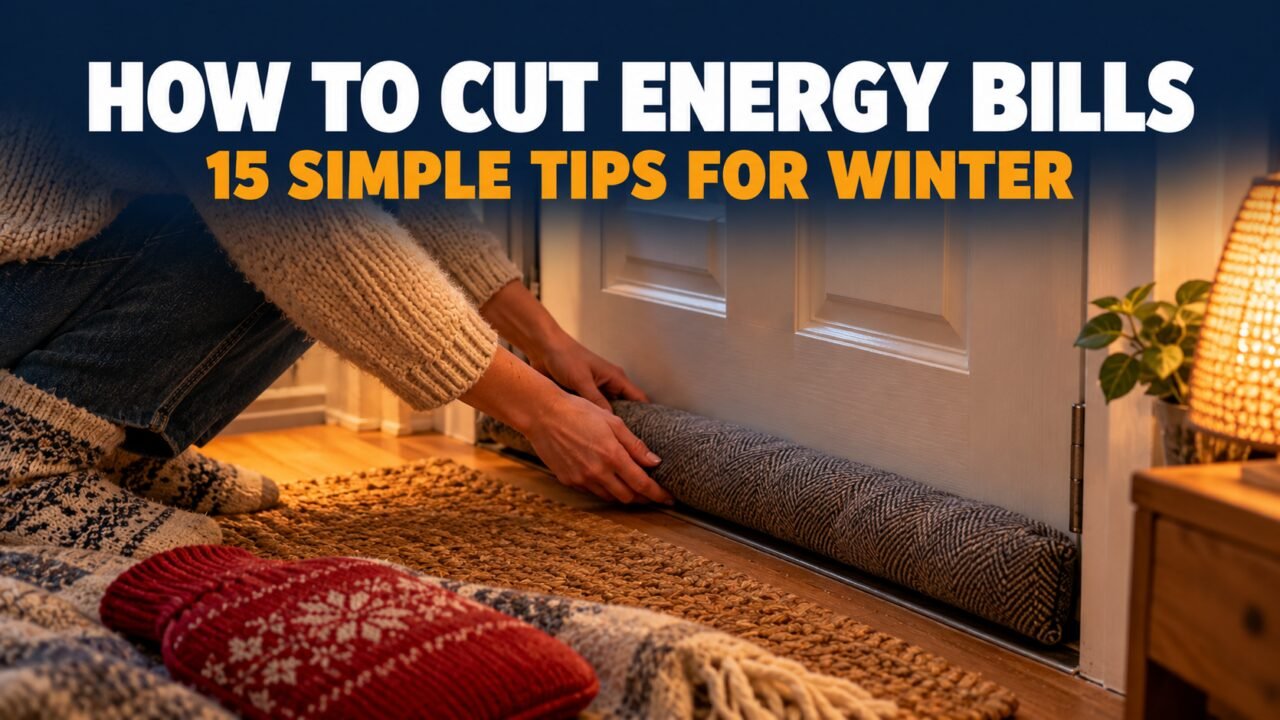
Gaps around doors, windows, letterboxes, loft hatches and floorboards let warm air escape. Draught-proofing strips, brush seals, letterbox covers and a draught excluder along the bottom of a door are cheap and easy to fit.
Do not block air bricks, trickle vents or extractor fans. Homes need some ventilation to prevent condensation and mould, especially in kitchens and bathrooms.
6. Close curtains at dusk
Drawing thick curtains or blinds as soon as it gets dark helps keep heat in. Open them during the day to let sunshine warm your rooms, particularly on south-facing windows.
Make sure curtains do not cover radiators, which sends heat straight out through the window.
7. Bleed your radiators
If the top of a radiator is cold while the bottom is warm, air is trapped inside, and the radiator is not heating the room properly. Bleeding it with a radiator key takes a few minutes. Check your boiler pressure afterwards, as it may need topping up.
8. Take shorter showers
Heating water is expensive. Cutting a minute or two from each shower adds up over a year, especially in a busy household. If you have an electric shower, the saving is on your electricity bill instead.
A water-efficient shower head can reduce the amount of hot water used without making showers feel weak.
9. Wash clothes at 30°C
Most modern detergents clean well at lower temperatures. Washing at 30°C rather than 40°C uses less energy, and running full loads means fewer washes overall. Keep hotter washes for towels, bedding or when someone is unwell.
10. Cut down on the tumble dryer
Tumble dryers are among the most expensive appliances to run. Where you can, dry clothes on a rack or line. Indoors, dry clothes in a well-ventilated room with a window slightly open or near an extractor fan, to reduce condensation and mould.
If you do use a dryer, spin clothes well in the washing machine first and clean the lint filter regularly.
11. Cook smarter
Ovens use a lot of energy to heat a large space. Microwaves, air fryers and slow cookers are often cheaper for smaller meals. Use a lid on pans, match the pan to the size of the ring, and batch cook so one oven session makes several meals.
Only boil the amount of water you need in the kettle.
12. Switch off standby
Televisions, games consoles, set-top boxes and chargers left on standby all use small amounts of power that add up over a year. Switching them off at the wall, or using a smart plug or standby saver, makes it easy.
Some devices, such as broadband routers and recorders, need to stay on, so be selective.
13. Change to LED bulbs
If you still have old halogen or incandescent bulbs, replacing them with LEDs is a cheap upgrade that pays back quickly. LEDs use a fraction of the electricity and last far longer.
14. Check your tariff and payment method
If you are on a standard variable tariff, compare fixed deals, but check exit fees and whether the fixed price is actually cheaper than the cap. Paying by Direct Debit is usually cheaper than paying on receipt of a bill. Submit regular meter readings so you pay for what you use rather than an estimate.
15. Insulate what you can
Insulation brings the biggest long-term savings, because it stops heat escaping in the first place. Loft insulation, cavity wall insulation and a hot water cylinder jacket are among the most cost-effective improvements. Even small steps, like insulating hot water pipes, help.
If you rent, talk to your landlord. Private rented homes in England and Wales must meet minimum energy efficiency standards, with some exceptions.
A 15-minute home energy check
Before you change anything, walk around your home with a notebook. It takes about 15 minutes and shows where your energy bills are going.
Start with the heating controls. Note the thermostat setting, the timer schedule and the boiler flow temperature. Then go room by room. Are radiators on in rooms nobody uses? Are any radiators cold at the top? Can you feel draughts around windows, doors or the letterbox? Is the loft hatch sealed?
Next, check hot water. How long are showers in your household? Is the hot water cylinder, if you have one, insulated? Finally, look at appliances. Which ones are on standby all the time, and how often is the tumble dryer used?
Most households find three or four quick wins. Fixing those first gives you the biggest cut in energy use for the least effort, and you can plan bigger jobs, such as insulation, for later.
Energy-saving myths to ignore
Some popular advice does not stand up. Leaving the heating on low all day is rarely cheaper than using a timer in a reasonably insulated home. Turning the thermostat right up does not heat a room faster. It just means the boiler runs for longer and overshoots.
Another common belief is that switching lights on and off uses more energy than leaving them on. With modern bulbs, it does not. Turn lights off when you leave a room.
Some products promise huge cuts in energy bills for very little money, such as plug-in “energy savers” that claim to reduce electricity use by fixing your wiring. Treat big claims with suspicion and look for independent reviews before you buy anything that sounds too good to be true.
Keeping heat in for longer
Heat escapes fastest through roofs, walls and windows. You cannot always fix those quickly, but you can slow the loss. Radiator reflector panels, placed behind radiators on outside walls, bounce heat back into the room. Thermal or lined curtains keep more warmth in than thin ones. Rugs on bare floorboards help, especially in older houses with gaps under the floor.
If your home has a hot water cylinder, a well-fitted insulating jacket keeps water hot for longer and reduces heating bills for very little cost. Insulating exposed pipes in lofts or under floors reduces heat loss and protects them from freezing.
These small upgrades add up, and together they can take a real bite out of heating bills over a long winter.
Tips for renters
Renters often feel stuck, because they cannot install insulation or replace a boiler. There is still plenty you can do to lower energy bills. Draught excluders, thick curtains, radiator reflectors, LED bulbs and smart plugs can all be used without permanent changes, and you can take them with you when you move.
You can also ask your landlord to improve the property. Many landlords are open to simple upgrades, especially if you explain how they help prevent damp and mould. Your home’s Energy Performance Certificate, which you can look up online, shows how efficient it is and what improvements are recommended.
If your home is cold, damp or has mould that your landlord will not deal with, your local council’s housing team or Citizens Advice can explain your rights.
Help with energy bills
If you are struggling to pay, contact your supplier early. Suppliers must offer help to customers in difficulty, including affordable payment plans, and many have hardship funds.
The Warm Home Discount gives eligible households a discount on their electricity bill during winter. Pensioners should check whether they qualify for the Winter Fuel Payment. People who are older, disabled or have a long-term health condition can join their supplier’s Priority Services Register.
Citizens Advice can help you check what support you are entitled to and deal with energy debt.
Grants for insulation and heat pumps
The government runs several schemes to help households make their homes more energy efficient, particularly lower-income households and those in the least efficient homes. The names and rules of these schemes change regularly, so check GOV.UK or the Energy Saving Trust for what is currently available where you live.
The Boiler Upgrade Scheme offers a grant towards the cost of replacing a gas or oil boiler with a heat pump in England and Wales. Heat pumps are much more efficient than boilers, but they suit some homes better than others, so get independent advice before deciding.
Save on energy and on food
Energy is only one part of the household budget under pressure. The same habits that help here, planning ahead, reducing waste and checking prices, work at the supermarket too. Our guide on how to save money on groceries has more ideas, written for American shoppers but useful everywhere.
Staying warm and healthy
Cutting energy use should never mean living in a home that is too cold. Cold homes are linked to heart and lung problems, and they make flu and other winter illnesses harder to shake off.
If money is tight, focus on keeping one or two rooms properly warm rather than the whole house slightly cold. Wear layers, use a hot water bottle or an electric blanket, which costs very little to run, and have hot food and drinks. Our guide to the NHS flu jab explains who can get free winter vaccines.
Tips for readers in the United States
Most of these tips work just as well in American homes, especially draught-proofing, which Americans usually call weatherstripping, lowering thermostat settings and using programmable thermostats. The US Department of Energy has long suggested setting thermostats to around 68°F while you are awake and lower while you sleep or are away.
Low-income households in the US may qualify for help through the Low Income Home Energy Assistance Program, known as LIHEAP, which is run by states. Many utility companies also offer budget billing, which spreads costs evenly across the year, and free home energy audits.
A winter energy checklist
Before the coldest weeks arrive, run through this short list:
- Submit a meter reading so your energy bills are based on real use
- Set your heating timer around your household’s routine
- Lower the boiler flow temperature if you have a combi boiler
- Fit draught excluders to doors and letterboxes
- Bleed radiators and check the boiler pressure
- Check whether you qualify for the Warm Home Discount or other support
- Have your boiler serviced if it is due, since a well-maintained boiler runs more efficiently and safely
Ticking off these jobs in October means you are ready when the heating goes on in earnest, and you are less likely to face an unexpected breakdown in the middle of winter.
How to cut energy bills: common questions
What is the cheapest way to heat a home?
For most homes, heating only the rooms you use, with good insulation and draught-proofing, is the cheapest approach. Keep the heating at a steady, moderate temperature rather than blasting it on and off.
Is it cheaper to leave the heating on low all day?
In most homes, no. Using a timer to heat the house when you need it is usually cheaper. Very damp or poorly insulated homes may benefit from a low background temperature.
Does lowering the boiler flow temperature really save money?
For many combi boilers, yes. It helps the boiler run more efficiently without making rooms colder.
Is an electric blanket cheap to run?
Yes. Electric blankets use very little electricity compared with heating a whole bedroom.
Who can help if I cannot pay my energy bills?
Your supplier, Citizens Advice and local council can all help. Ask early rather than letting debt build up.
Pick three tips from this list and try them this week, starting with the boiler flow temperature and draught-proofing. For more practical guides, see our lifestyle section.