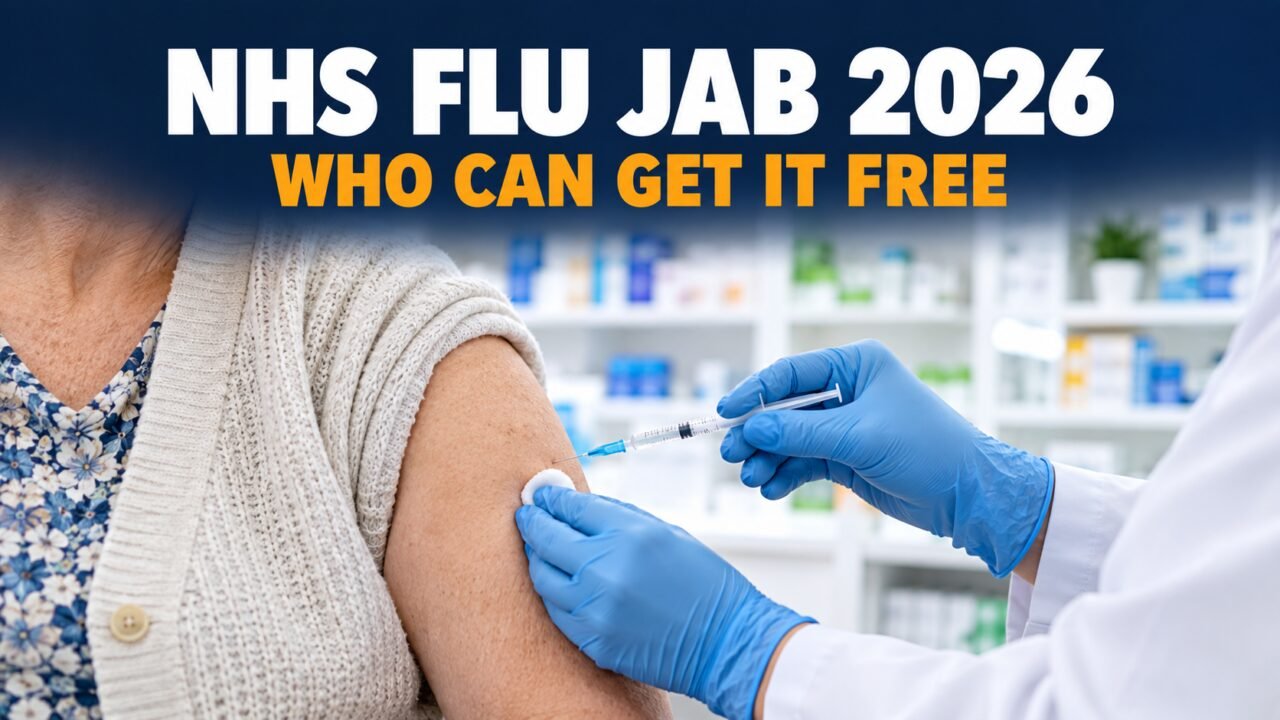
The NHS flu jab is available again this autumn, free for millions of people who are most at risk of serious illness from flu. Children and pregnant women can usually get it from early September, and adults aged 65 and over and other eligible groups from October. If you are eligible, getting vaccinated before flu starts spreading widely gives your body time to build protection.
Flu is often dismissed as a bad cold, but it is not. Every winter, it puts tens of thousands of people in hospital across the UK and causes thousands of deaths, mostly among older people and those with long-term health conditions. This guide explains who can get the vaccine free, how to book, what side effects to expect and what the vaccine can and cannot do.
Table of Contents
Why the NHS flu jab matters
Flu viruses change every year, and immunity from a previous infection or vaccine fades over time. That is why the vaccine is updated and offered every autumn. Each year’s vaccine is designed to match the strains that experts expect to circulate that winter.
The vaccine does two jobs. It lowers your chance of catching flu, and if you do catch it, it makes serious illness, hospital admission and death less likely. Protection is not perfect, and how well the vaccine works varies from year to year, but it remains the best protection available.
Last winter showed why timing matters. The UK flu season started unusually early, driven by a strain of H3N2, and hospitals came under heavy pressure well before Christmas. People who had already been vaccinated were better protected when cases rose.
Who can get the NHS flu jab free?
In England, the free flu vaccine is usually offered to:
- Adults aged 65 and over, including those who turn 65 before the end of March
- People aged 6 months to 64 with certain long-term health conditions
- Pregnant women, at any stage of pregnancy
- Children aged 2 or 3 on 31 August
- School-aged children, through vaccination at school
- People living in care homes
- Carers, including those who receive Carer’s Allowance or are the main carer of an older or disabled person
- People who live with someone who has a weakened immune system
- Frontline health and social care workers
The exact eligibility list is set each year, and there are small differences between England, Scotland, Wales and Northern Ireland. Check the NHS flu vaccine page or ask your GP surgery or pharmacist if you are not sure.
Long-term conditions that qualify
Many people do not realise that their health condition makes them eligible. You can usually get the free vaccine if you have:
- A long-term lung condition, such as asthma that needs a steroid inhaler or tablets, COPD or bronchitis
- Diabetes
- A heart condition, such as heart failure
- Chronic kidney disease or liver disease
- A condition affecting the brain or nerves, such as Parkinson’s disease, motor neurone disease or multiple sclerosis
- A learning disability
- A weakened immune system, because of a condition or treatment such as chemotherapy or steroid tablets
- Problems with your spleen, or no spleen
- A BMI of 40 or above
If you have any of these, do not wait for an invitation. Contact your GP surgery or a pharmacy to book.
When can you get the flu jab?
The timings in England are staggered. Pregnant women and children are usually offered the vaccine from 1 September. Adults aged 65 and over, adults with health conditions, carers and other eligible adults are usually offered it from 1 October.
The NHS moved the start date for most adults to October a couple of years ago, because protection from the vaccine can wane over the winter, and a slightly later jab gives better cover during the peak months. The programme usually runs until the end of March, but the earlier you are vaccinated after it opens, the sooner you are protected.
It takes around 10 to 14 days after the jab for your body to build protection, so try not to leave it until flu is already spreading in your area.
How to book your NHS flu jab
There are several ways to get vaccinated:
- Your GP surgery, which may contact you by text, letter or phone
- A community pharmacy that offers NHS flu vaccination, for adults
- The NHS App or NHS website, where you can book at a local pharmacy
- Your maternity service, if you are pregnant
- School, for school-aged children, with parental consent
For children aged 2 and 3, the vaccine is usually given at the GP surgery. Health and social care workers are often offered it through their employer.
If you are housebound, tell your GP surgery, which can arrange for someone to vaccinate you at home.
What type of flu vaccine will you get?
There are several flu vaccines, and the NHS offers the one that works best for your age group.
Most children are offered a nasal spray, which is quick and painless. It is a live but weakened vaccine that cannot cause flu in healthy children. The spray contains a small amount of gelatine derived from pork. Children who cannot have gelatine, for medical or religious reasons, may be able to have an injected vaccine instead. Ask your GP or the school team.
Adults are given an injected vaccine, usually in the upper arm. People aged 65 and over are given vaccines designed to produce a stronger immune response, because the immune system weakens with age.
Can the flu jab give you flu?
No. The injected flu vaccines used for adults do not contain live virus, so they cannot cause flu. The nasal spray for children contains weakened virus that cannot cause flu in healthy children.
Some people feel slightly unwell for a day or two after vaccination. That is the immune system responding to the vaccine, not an infection. If you catch a cold or a stomach bug around the same time, it can be easy to blame the jab, but it is a coincidence.
Common side effects
Most side effects are mild and pass within a day or two. After an injected vaccine, you may have:
- A sore, red or swollen arm where the needle went in
- A slightly raised temperature
- Aching muscles or tiredness
Children who have the nasal spray may get a runny or blocked nose, a headache or tiredness, and some may eat less for a short time.
Serious allergic reactions are very rare. The people who give vaccines are trained to deal with them. If you have had a serious reaction to a vaccine before, tell the person vaccinating you.
Who should not have the flu jab?
Most people can have the flu vaccine. You should talk to your GP or pharmacist first if you have had a serious allergic reaction to a previous flu vaccine or any of its ingredients.
If you are unwell with a high temperature on the day of your appointment, it is usually best to wait until you have recovered. A mild cold is not normally a reason to delay.
People with an egg allergy can usually still have the flu vaccine, because many vaccines are egg-free or contain very low levels of egg protein. Tell the person vaccinating you so they can choose the right product.
Flu jab during pregnancy
Pregnant women are more likely to become seriously ill with flu, and flu can also cause problems for the baby, such as being born early or with a low birth weight. The NHS recommends the flu vaccine at any stage of pregnancy.
The vaccine also passes some protection to the baby, which helps during the first few months of life, when babies are too young to be vaccinated themselves. You can get it through your GP, pharmacy or maternity service.
Other winter vaccines to know about
The flu jab is not the only vaccine offered in autumn and winter. The NHS also runs an autumn COVID-19 vaccination programme, which in recent years has been focused on older adults, care home residents and people with weakened immune systems. Eligibility can change from year to year, so check the latest NHS guidance.
The RSV vaccine protects against respiratory syncytial virus, which can cause serious lung infections in older people and babies. The NHS offers it to older adults in certain age groups and to pregnant women from 28 weeks, to protect newborns. The programme has been expanded since it launched, so ask your GP whether you qualify.
In many cases, you can have more than one vaccine at the same appointment.
Paying for a flu jab if you are not eligible
If you are not eligible for a free NHS flu jab, you can usually pay to have one at a pharmacy. Many high street pharmacies and supermarkets offer private flu vaccination for a small fee. Some employers also offer free flu jabs to staff.
Even if you are young and healthy, getting vaccinated can protect people around you, such as older relatives or friends with health conditions.
How to protect yourself and others from flu
Alongside vaccination, simple habits help limit the spread of flu and other winter viruses:
- Wash your hands often with soap and water
- Catch coughs and sneezes in a tissue, bin it and wash your hands
- Stay at home if you are unwell with a high temperature, especially if you work with vulnerable people
- Keep your home warm, particularly if you are older or have a health condition
Staying warm matters because cold homes make respiratory illness worse. Our guide to the energy price cap from October includes advice on help with heating bills.
Flu symptoms and when to get help
Flu symptoms tend to come on quickly and can include a sudden high temperature, aching body, exhaustion, dry cough, sore throat, headache, loss of appetite and difficulty sleeping. Most healthy people recover within a week or so with rest, fluids and paracetamol or ibuprofen if suitable.
Get medical help from NHS 111 or your GP if you are worried about a baby or child, you are 65 or over, you are pregnant, you have a long-term condition or weakened immune system, or your symptoms do not improve after a week. Call 999 if someone has severe difficulty breathing, chest pain, or becomes confused or very drowsy.
Common myths, and the facts
A few beliefs about flu and vaccination come up every year.
“I had it last year, so I am covered.” Protection fades over months, and the viruses change. Last year’s vaccine is designed for last year’s strains, so a new dose is needed each autumn.
“I am healthy, so flu will not hurt me.” Healthy adults usually recover, but flu can still knock you off your feet for a week or more, and in rare cases it causes serious complications even in fit people. You can also pass it to someone more vulnerable before you know you are ill.
“Antibiotics will sort it out.” Flu is caused by a virus, and antibiotics do not work against viruses. Doctors sometimes prescribe antiviral medicines for people at high risk, which work best when started early.
“It is too late once winter starts.” It is better to be vaccinated early in the season, but getting protected in December or January is still worthwhile if flu is circulating.
Flu and work
Going to work with flu spreads it to colleagues and customers, and it usually means a slower recovery. If you have a high temperature and feel too unwell to carry out your normal activities, the general advice is to stay at home until the fever has gone.
If you work in health or social care, with children, or with older people, it is especially important not to go in while you are ill. Many employers in these sectors offer free vaccination to staff for exactly this reason.
Check your employer’s sickness policy so you know what to expect. Employees who are too ill to work may be entitled to Statutory Sick Pay, depending on their circumstances.
Looking after someone with flu at home
If someone in your household has flu, a few steps help them recover and protect everyone else. Make sure they rest and drink plenty of fluids. Keep them warm, and use paracetamol or ibuprofen to ease fever and aches if suitable for them.
Where possible, let them rest in a separate room, and open a window for short periods to let fresh air in. Wash your hands after caring for them and after touching tissues, cups or towels they have used. Clean door handles, phones and remote controls regularly.
Keep a close eye on older relatives, young children and anyone with a long-term condition. If their breathing becomes difficult, they become confused, or they are not drinking enough, get medical help quickly.
A note for readers in the United States
In the US, the Centers for Disease Control and Prevention has long recommended an annual flu vaccine for most people aged 6 months and older, with September and October generally seen as good times to be vaccinated. Pharmacies, doctors’ offices and many workplaces offer flu shots, often at no cost with health insurance. Check with your doctor or pharmacist for current guidance, as recommendations can change.
For more on staying healthy, see our guide to heart attack symptoms in women.
What parents should know about the school programme
For school-aged children, the vaccine is usually given at school by a local immunisation team, and parents are asked to fill in a consent form beforehand. Look out for it in school emails or bags in September and October, because children cannot be vaccinated without consent.
If your child misses the session at school, for example because they were off sick, ask the immunisation team about catch-up clinics. Children with severe asthma or certain other conditions may be offered an injected vaccine instead of the nasal spray, so mention any health problems on the form.
NHS flu jab: common questions
Who can get a free NHS flu jab?
Adults 65 and over, people with certain long-term health conditions, pregnant women, young children and school-aged children, care home residents, carers and frontline health and social care workers, among others.
When does the NHS flu jab start?
Usually from 1 September for pregnant women and children, and from 1 October for most eligible adults in England.
Can I get the flu jab at a pharmacy?
Yes. Eligible adults can get the NHS flu jab free at many pharmacies, and people who are not eligible can often pay for one.
How long does it take for the flu jab to work?
Around 10 to 14 days.
Can I have the flu jab and COVID vaccine together?
Often, yes, if you are eligible for both. Ask when you book.
If you are eligible, book your NHS flu jab this week and encourage older relatives to do the same. For more health guides, see our health section.
This article is general information and not medical advice. Eligibility and timings can vary by nation and year, so check the NHS website or speak to your GP or pharmacist.