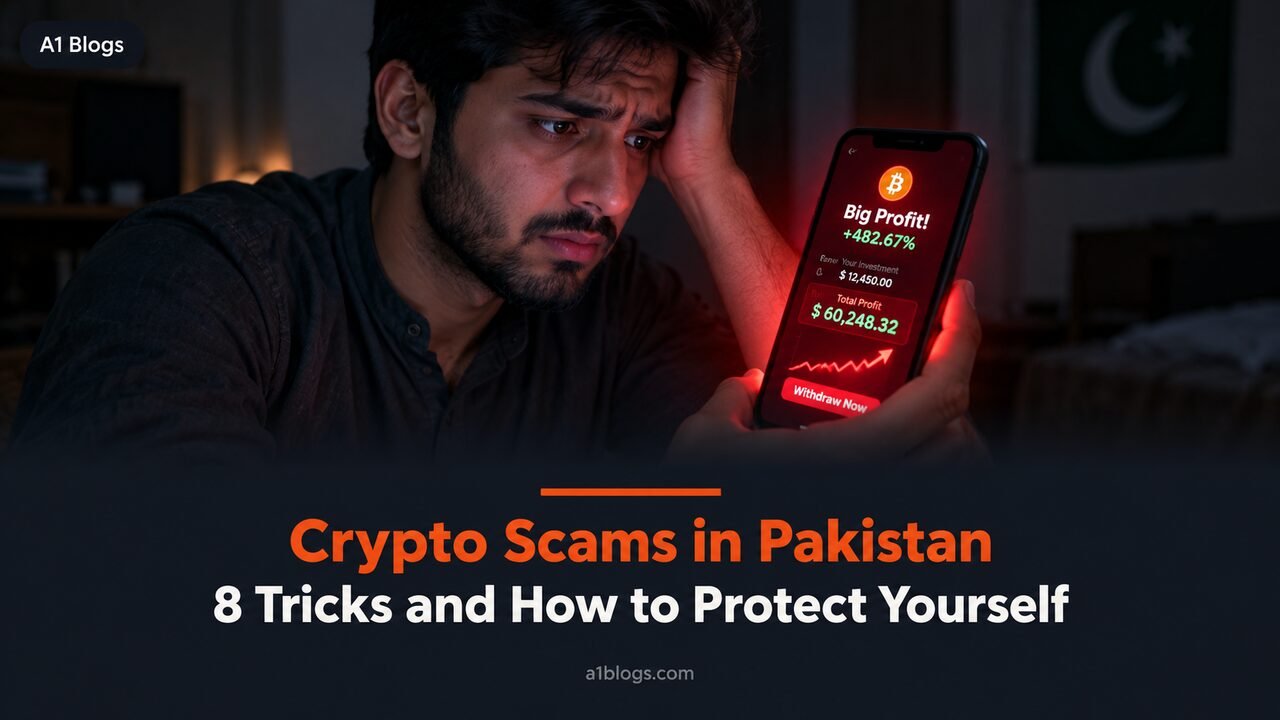
Crypto has made some Pakistanis money and cost many more their savings, and a large share of those losses had nothing to do with prices. They came from scams: fake platforms, “guaranteed” daily profits, strangers on WhatsApp and apps that show profits that never existed.
The new rules help. Since 2026, crypto businesses serving Pakistan must be licensed by the Pakistan Virtual Assets Regulatory Authority (PVARA), which gives you a clear first check. But scammers adapt quickly. This guide explains the most common crypto scams in Pakistan, the warning signs, how to check a platform, and what to do if you have been caught.
*This article is for information only. If you have lost money to fraud, contact your bank and the authorities as soon as possible.*
Table of Contents
Why crypto scams in Pakistan are so common
Several things make Pakistan an attractive target. Millions of people are interested in crypto but few have had reliable information about it. For years there was no regulator to complain to and no banking route to licensed platforms, so people traded through strangers on peer-to-peer apps. Many families also look for ways to protect savings from inflation and a falling rupee, which makes promises of steady dollar returns tempting.
The Virtual Assets Act of 2026 and PVARA’s licensing regime are changing that, but the scams have not disappeared. Some now use the new rules as a selling point, falsely claiming to be “PVARA approved”.
The most common crypto scams in Pakistan
1. Fake exchanges and trading apps
These look like real trading platforms, with charts, balances and profits. In reality, the numbers are invented. You deposit money, watch your “profits” grow, then find you cannot withdraw unless you pay a fee, a tax or a “verification deposit”. Each payment leads to another demand until you stop paying.
2. Daily-profit “mining” and “staking” schemes
You are told your money will earn 1% to 3% a day from crypto mining, staking or trading bots. Early investors are paid with later investors’ money, so the scheme looks real for a while. Then it collapses. Any scheme that promises fixed daily or monthly returns is almost certainly a Ponzi scheme.
3. WhatsApp and Telegram investment groups
You are added to a group full of people posting profits and thanking an “expert”. Many of the members are fake accounts. The expert recommends a token or a platform, and once enough people buy in, the organisers sell and the price collapses, or the platform disappears.
4. Task and job scams paid in crypto
You are offered online work, such as liking videos or rating products, paid in USDT. The first small payments arrive. Then you are asked to “upgrade” by depositing your own money to unlock bigger tasks, and the money is never returned.
5. Romance and friendship investment scams
Someone befriends you online over weeks or months, then introduces you to a “great investment” they use themselves. The platform is fake, and the friend is part of the scheme.
6. Fake support staff and wallet drainers
Scammers pose as customer support from an exchange or wallet, often replying to complaints on social media. They ask for your recovery phrase or send you to a fake website that empties your wallet when you connect it. No genuine support agent ever needs your recovery phrase.
7. Peer-to-peer payment fraud
In peer-to-peer trades, a buyer may use stolen money to pay you, or claim the payment was unauthorised after receiving coins. Your bank account can be frozen while the case is investigated, even though you did nothing wrong.
8. Recovery scams
After losing money, victims are often contacted by people claiming they can recover it for an upfront fee, sometimes posing as lawyers, hackers or government officials. They cannot. This is a second scam aimed at people who have already been hurt.
Warning signs of crypto scams in Pakistan
- Guaranteed returns, especially daily or monthly ones.
- Pressure to invest quickly before an offer “closes”.
- Requests to pay fees or taxes before you can withdraw.
- Contact from strangers on WhatsApp, Telegram, Instagram or dating apps.
- Profits shown only as screenshots.
- Claims of being “PVARA approved” or “government approved” that you cannot verify.
- Requests for your recovery phrase, passwords or remote access to your phone.
- Rewards for recruiting friends and family.
How to check a platform before you invest
- Check PVARA licensing. Since August 2026, PVARA has run a licensing portal, and existing operators had to apply for a no-objection certificate by 5 September 2026. Check the PVARA website and ask the platform for its licence or certificate details.
- Search for warnings. Look for the platform’s name together with words such as “scam”, “withdrawal” or “fraud”, and check whether regulators such as the SECP have issued warnings about it.
- Check the web address carefully. Fake sites often use addresses that differ from the real one by a single letter.
- Test a withdrawal with a small amount before depositing more.
- Ask how it makes money. If the answer is vague, or the returns seem too good, walk away.
Our guide to whether crypto is legal in Pakistan explains the licensing rules in more detail.
How to protect your accounts
- Turn on two-factor authentication with an authenticator app rather than SMS where possible.
- Never share your recovery phrase; write it down and keep it offline.
- Use a separate email address for crypto accounts.
- Download apps only from official app stores, and check the developer name.
- Be wary of anyone asking you to install screen-sharing or remote-access apps.
What to do if you have been scammed
Act quickly. Speed gives you the best chance of limiting the damage.
- Stop sending money, whatever you are told about fees or penalties.
- Contact your bank or wallet provider immediately and ask them to block further transfers and flag the recipient account.
- Collect evidence: screenshots of chats, transaction IDs, wallet addresses, website addresses and payment receipts.
- Report it to the National Cyber Crime Investigation Agency (NCCIA), which handles online fraud cases in Pakistan and took over this work from the FIA’s cybercrime wing.
- Report the account or group to the platform where you met the scammer.
- Beware of recovery offers. Anyone who contacts you promising to recover your money for a fee is almost certainly another scammer.
Sharing your experience with family and friends can stop the same scammer reaching them. Many victims stay silent out of embarrassment, which is exactly what scammers rely on.
Protecting older relatives
Older people are frequent targets, often through calls or messages that seem to come from a bank, a government office or a family member in trouble. Talk to older relatives about these tricks, agree that they will call you before sending money to anyone new, and help them set up their accounts securely.
How a typical scam unfolds
The details change, but most stories follow the same steps. Here is a composite example based on the patterns described above.
A young professional in Lahore is added to a Telegram group about crypto trading. Members post screenshots of daily profits and thank the group’s “mentor”. After a week of watching, he is invited to open an account on a trading app the mentor recommends and deposits Rs20,000 by bank transfer to a person described as a payment agent.
Within days the app shows a profit of Rs8,000. He withdraws Rs5,000, and it arrives, which convinces him the platform is real. Over the next month he deposits Rs400,000, much of it borrowed, and the app shows his balance doubling.
When he tries to withdraw, he is told to pay a 20% “tax” first. He pays. Then comes an “anti-money laundering verification fee”. When he refuses to pay more, his account is frozen, the group deletes him and the mentor stops replying. The small early withdrawal was the bait.
Almost every element in this story is a warning sign listed in this guide.
The bigger picture
Crypto scams in Pakistan follow the same pattern as forex and other investment frauds: promises of easy, guaranteed income, social pressure and fake proof. The same rules protect you from all of them. Our guide to forex trading in Pakistan covers the forex versions, and our Urdu guide to online fraud explains other common tricks.
Frequently asked questions
How can I tell if a crypto platform is a scam?
Guaranteed returns, withdrawal fees, pressure to invest quickly and contact from strangers are the clearest signs. Check PVARA licensing and test a small withdrawal before investing more.
Where do I report crypto scams in Pakistan?
Report to your bank immediately, then to the National Cyber Crime Investigation Agency (NCCIA). Also report the scammer’s account to the platform used to contact you.
Can I get my money back?
Sometimes, if you act very quickly and the money is still in a bank account that can be frozen. Crypto transfers are much harder to reverse. Never pay anyone who promises recovery for a fee.
Is a “PVARA approved” claim enough?
No. Verify any licence claim yourself through official PVARA channels. Scammers often use the regulator’s name to look legitimate.