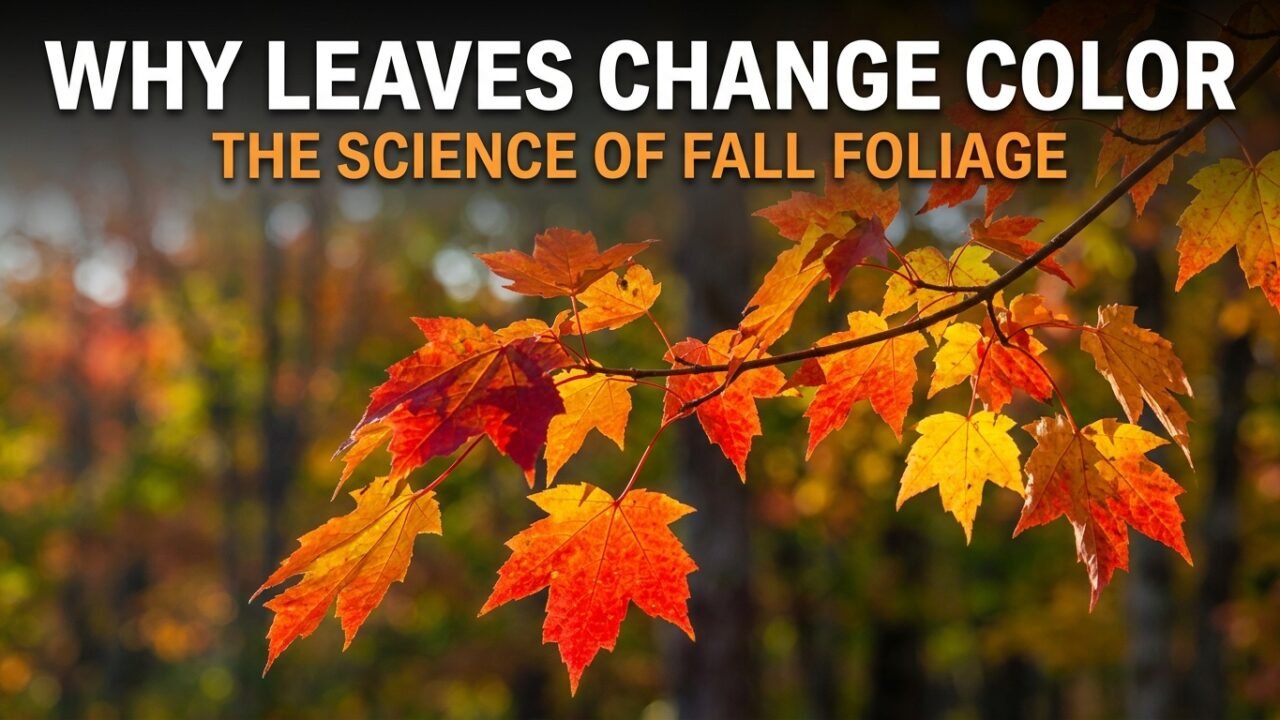
Why leaves change color in fall is one of those questions most of us learned the answer to in school and then forgot. The short version is that the yellows and oranges were in the leaves all summer, hidden by green, while the reds are made fresh in autumn. The longer version involves chemistry, weather, water and a clever piece of tree biology that decides when each leaf lets go.
This guide explains the science behind fall foliage, why some years are brilliant and others dull, where and when to see the best colors in the United States, and a few things you can do with the leaves once they fall.
Table of Contents
Why leaves are green in the first place
Leaves are green because they are full of chlorophyll, the pigment plants use to capture sunlight and turn water and carbon dioxide into sugars through photosynthesis. Chlorophyll absorbs red and blue light and reflects green, which is why most leaves look green in spring and summer.
Chlorophyll is not permanent. Trees break it down and rebuild it constantly throughout the growing season, as long as there is enough light and warmth. That constant renewal keeps leaves looking bright green all summer.
Why leaves change color: the three pigment groups
The colors of fall foliage come from three main groups of pigments.
Carotenoids: the yellows and oranges
Carotenoids are the same family of pigments that make carrots orange and corn yellow. They are present in leaves all summer, helping to capture light and protect the leaf, but they are masked by the much larger amount of chlorophyll.
In autumn, as chlorophyll breaks down, carotenoids are revealed. That is why trees such as birches, aspens, hickories and tulip poplars turn golden yellow almost every year, regardless of the weather.
Anthocyanins: the reds and purples
Anthocyanins are different. For most trees, they are not in the leaves during summer at all. They are produced in autumn, from sugars trapped in the leaf as it prepares to fall. The same family of pigments gives cranberries, red apples and blueberries their color.
Red maples, sugar maples, sweetgums, dogwoods, sumacs and scarlet oaks are famous for their reds and purples. The amount of anthocyanin a tree makes depends heavily on the weather, which is why the reds vary so much from year to year.
Tannins: the browns
When other pigments have faded, tannins remain, giving leaves a brown color. Some oaks turn mostly brown or russet, and many leaves turn brown on the ground as they dry out.
What triggers the change?
The main trigger is the length of the night. As days shorten in late summer and early fall, trees sense the longer periods of darkness and begin preparing for winter. Cooler temperatures speed up the process.
Trees slow and then stop making new chlorophyll. The existing chlorophyll breaks down, and the tree pulls valuable nutrients, especially nitrogen, back from the leaves into its branches and roots to use next spring. That is part of why the change happens: it is a way of recycling resources before the leaves are lost.
At the same time, a layer of special cells called the abscission layer forms where each leaf stem joins the branch. It gradually seals off the leaf, and eventually the leaf detaches and falls. The sealed spot leaves a small scar that protects the tree from water loss and infection.
Why trees drop their leaves at all
Broad, thin leaves are excellent for catching sunlight, but they lose a lot of water and are easily damaged by freezing temperatures, snow and ice. In winter, when the ground is cold or frozen and water is hard to draw up, keeping those leaves would cost more than they could produce.
So deciduous trees shed their leaves and go dormant, living on stored energy until spring. Evergreen conifers, such as pines and spruces, take a different approach. Their narrow, waxy needles lose much less water and can survive the cold, so they keep them year-round.
Why some years have better fall foliage
Fall foliage watchers often talk about “good years” and “bad years,” and the weather is the reason. According to the USDA Forest Service, the most brilliant colors tend to follow a warm, wet spring, a summer that is not too hot or dry, and an autumn with plenty of sunny days and cool, but not freezing, nights.
Sunny days let leaves keep making sugars. Cool nights stop those sugars from moving out of the leaf. Trapped sugar is the raw material for anthocyanins, so these conditions produce the most vivid reds.
Other conditions dull the show. A severe summer drought can cause leaves to turn brown and drop early. A warm, cloudy, wet autumn can produce muted colors. An early hard frost can kill leaves before they have time to color, and strong storms can strip trees before peak.
Why red leaves exist
Scientists are still debating exactly why some trees spend energy making red pigments in leaves they are about to drop. One leading explanation is that anthocyanins act like sunscreen. They may protect the leaf from bright light and cold stress while the tree pulls nutrients back from it, allowing the tree to recover more nitrogen before the leaf falls.
Another idea is that bright red leaves send a signal to insects, such as aphids that lay eggs on trees in autumn, suggesting that the tree is healthy and well defended. The research is not settled, and both explanations may play a part.
When fall foliage peaks in the US
Peak color moves across the country from north to south and from high elevations to low ones:
- Northern New England, the Adirondacks and the upper Midwest often peak from late September to mid-October
- Southern New England, New York and Pennsylvania often peak in mid to late October
- The mid-Atlantic and the southern Appalachians often peak from mid-October to early November
- The Deep South and lower elevations may not peak until early to mid-November
In the Rocky Mountains, golden aspens often turn in mid to late September. Elevation matters everywhere. Mountain peaks color before the valleys below them, sometimes by several weeks.
Many states and tourism boards publish weekly foliage reports during the season, and interactive prediction maps are widely available. Check them before planning a trip, since the timing shifts each year.
Best places to see fall foliage
The United States has some of the world’s finest autumn color, thanks to its large variety of native trees. A few celebrated spots:
- Vermont and New Hampshire, including the White Mountains and the Kancamagus Highway
- Acadia National Park in Maine, where colorful forests meet the rocky coast
- The Adirondack and Catskill Mountains in New York
- Shenandoah National Park’s Skyline Drive in Virginia and the Blue Ridge Parkway
- Great Smoky Mountains National Park in Tennessee and North Carolina
- Michigan’s Upper Peninsula and northern Wisconsin
- Colorado’s aspen groves, especially around Aspen and in the San Juan Mountains
Popular areas get crowded at peak times. Visiting on weekdays, arriving early in the morning, or exploring lesser-known state parks and forests nearby can make the experience more relaxed. The National Park Service posts updates and tips for parks known for fall color.
Fall foliage in the UK
British readers often notice that American autumn colors look more intense than the ones at home. Part of the reason is the tree species. North America has many native trees, especially maples and oaks, that produce strong reds, while many common British trees turn yellow and brown. The UK’s cloudier, milder autumns can also mean fewer of the bright days and crisp nights that trigger vivid reds.
Britain still has wonderful autumn color, especially in arboretums planted with trees from around the world. Westonbirt, the National Arboretum in Gloucestershire, is famous for its maples, and many National Trust gardens and ancient woodlands are at their best in October.
A guide to trees and their fall colors
Once you know what to look for, you can often identify trees by their autumn color alone:
- Sugar maple: brilliant orange, gold and red, often on the same tree
- Red maple: bright scarlet, sometimes yellow, and often one of the first trees to turn
- Birch and aspen: clear, glowing yellow and gold
- Hickory: golden bronze
- Sweetgum: a mix of purple, red, orange and yellow, sometimes on a single branch
- Dogwood: deep red to purple
- Black gum, also called tupelo: vivid red, often early in the season
- Oak: red, russet or brown, and often late to turn
- Ginkgo: bright butter yellow, and famous for dropping nearly all its leaves within a day or two
- Beech: golden bronze, and young beeches often keep their dry leaves all winter
Mixed forests with many species produce the patchwork of colors that makes New England and the Appalachians so famous.
Climate change and autumn color
Scientists are studying how a warming climate affects fall foliage. Warmer autumns can delay the moment when leaves change color, because the cooler temperatures that help trigger the process arrive later. Some studies in the northeastern United States have found peak color arriving later than in past decades.
Drought and extreme heat, which are becoming more common in some regions, can stress trees and cause leaves to brown and drop before they color. Over longer periods, the ranges of some trees, such as sugar maples, may shift northward, which could change the mix of colors in certain places.
The effects vary by region and year, and research is ongoing. What seems clear is that the timing of peak color is becoming less predictable, which makes checking weekly foliage reports more useful than relying on past calendars.
Fall foliage and the economy
Leaf peeping is big business. In New England and parts of the Appalachians, the fall foliage season brings a wave of visitors who fill hotels, restaurants, farm stands and scenic railroads. For many rural towns, autumn is one of the most important times of the year for local businesses.
That is one reason states invest in foliage reports, scenic byway maps and fall festivals. It is also why popular spots can be crowded, and why booking accommodation early is wise if you plan to visit at peak.
Leaf-peeping safety and etiquette
Scenic drives are part of the fun, but they bring risks. Never stop in the road or on a blind curve to take a photo. Use designated pull-offs and parking areas, and watch for other drivers who are distracted by the view.
Respect private property. Many of the most photographed barns, orchards and farm roads belong to working farms. Stay on public paths, ask before entering fields, and do not pick leaves or branches from trees on private land.
In many rural areas, fall is also hunting season. If you are hiking in forests where hunting is allowed, wear bright orange and stay on marked trails. Check local rules before you go.
Bring autumn color to your own yard
If you would like more fall color at home, autumn is a good time to plant many trees and shrubs, because cooler weather and fall rain help roots establish before winter.
Native trees such as red maple, black gum, serviceberry and flowering dogwood offer strong autumn color and support local wildlife. Shrubs such as oakleaf hydrangea, fothergilla and native blueberries also color well. Choose plants suited to your soil, sunlight and climate, and ask a local nursery or extension office for advice on species that do well in your area.
A fall foliage experiment for kids
If you want to show children why leaves change color, a simple kitchen experiment reveals the hidden pigments. Collect a few green leaves from the same tree, tear them into small pieces and put them in a jar. Cover them with a little rubbing alcohol, which an adult should handle, and let the jar sit in a bowl of warm water for about half an hour, stirring occasionally, until the liquid turns green.
Then dip one end of a strip of coffee filter paper into the liquid and leave it for an hour or more. As the liquid climbs the paper, it separates into bands of color. Alongside the green of chlorophyll, you will often see yellow and orange bands. Those are the carotenoids that appear when leaves change color in fall.
Pressing leaves between sheets of paper in a heavy book is another easy project. Collect leaves at different stages of fall foliage, from green to red, and press them to make a simple record of the season.
Tips for photographing autumn leaves
A few simple tips help capture fall foliage well. Soft, overcast light often shows leaf colors more richly than harsh midday sun. Backlit leaves, with the sun shining through them, glow beautifully in the early morning or late afternoon.
Look for reflections in lakes and rivers, and include something in the foreground, such as a path, a fence or a person, to give a sense of scale. On a phone, tap to focus on the leaves and slightly lower the exposure to stop bright colors from washing out.
What to do with fallen leaves
Fallen leaves do not have to go in the trash. Mowing leaves where they lie chops them into small pieces that break down and feed your lawn. Raked leaves make excellent mulch for garden beds and can be composted into rich leaf mold for next year’s garden.
Leaving some leaves in garden corners and under shrubs helps wildlife. Many insects, including some butterflies and moths, spend the winter in leaf litter, and birds forage there too. Just clear leaves from lawns in thick layers, which can smother grass, and from paths and drains, where wet leaves become slippery and cause blockages.
Why leaves change color: common questions
Why do leaves turn yellow in the fall?
Yellow and orange pigments called carotenoids are present all summer. They become visible when green chlorophyll breaks down in autumn.
Why do some leaves turn red?
Red and purple pigments called anthocyanins are made in autumn from sugars trapped in the leaf. Sunny days and cool nights produce the brightest reds.
What makes a good fall foliage season?
A wet spring, a moderate summer and an autumn with sunny days and cool, frost-free nights.
When is peak fall foliage in New England?
Often from late September in the far north to late October in southern New England, depending on elevation and weather.
Why do evergreen trees keep their needles?
Their narrow, waxy needles lose little water and tolerate cold, so the trees can keep them through winter.
Plan a walk or drive during your local peak and look closely at a single leaf: you will see the chemistry at work. For more science stories, see our guides to the northern lights and beaver reintroduction, and our science section.